What Happens During a Weight Management Pilates Session?
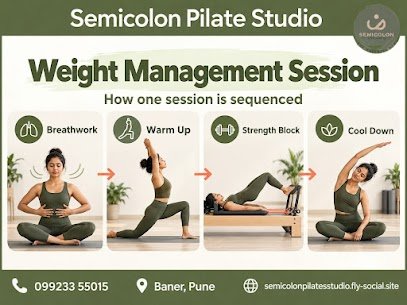
Weight management is not just about losing weight. It also involves building strength, improving mobility, maintaining an active lifestyle, and developing exercise habits that are realistic to follow. Pilates can be a useful part of this process because it combines controlled movements, focused breathing, and exercises that work different muscle groups.
At Semicolon Pilates Studio in Baner, Pune, Pilates offers an opportunity to focus on movement, core strength, flexibility, and overall physical well-being with guided instruction. Understanding what happens during a weight management Pilates session can help you feel more prepared before attending your first class.
What Is Weight Management Pilates?
Weight management Pilates is a fitness approach that uses controlled movements and resistance-based exercises to strengthen muscles, improve body awareness, and support regular physical activity. Sessions may focus on the core, hips, legs, arms, shoulders, and back, depending on the participant's fitness level and goals.
Unlike workouts that focus primarily on speed or high-intensity movements, Pilates places importance on technique, breathing, alignment, and control. The difficulty can be adjusted to suit beginners and people with previous exercise experience.
Although Pilates can contribute to an active lifestyle, weight changes depend on several factors, including nutrition, total daily activity, sleep, and individual health.
How Does a Weight Management Pilates Session Begin?
A session may start with a discussion about your fitness goals, previous exercise experience, and any movement limitations. This helps the instructor understand your starting point and select appropriate exercises.
For beginners, the initial focus is often on learning correct positioning, breathing techniques, and basic movements. Participants with more experience may work on progressing their exercises while maintaining proper form.
This individual attention is important because every participant has different abilities and fitness needs. Movements can be modified to make them more accessible or gradually more challenging.
What Exercises Are Included in a Pilates Session?
Core Strengthening
Core exercises target the muscles around the abdomen, back, and pelvis. Movements such as pelvic tilts, controlled leg lifts, and modified abdominal exercises can help develop core strength and stability.
A stronger core supports posture and controlled movement during everyday activities. However, abdominal exercises do not specifically remove fat from the stomach area.
Full-Body Conditioning
Pilates sessions can involve movements that engage the arms, shoulders, hips, glutes, and legs. The instructor may guide participants through controlled repetitions that challenge muscular endurance without compromising technique.
Depending on the class format and available equipment, exercises may be performed on a mat or with specialised Pilates equipment. The intensity varies according to the resistance, exercise selection, pace, and individual effort.
Flexibility and Mobility
Controlled stretching and mobility exercises help participants work on their range of motion and movement control. These exercises may be particularly useful for people who spend long hours sitting or want to become more comfortable with everyday movement.
Flexibility work is balanced with strengthening exercises so participants can develop a more rounded fitness routine.
Balance and Posture
Pilates encourages awareness of body alignment and balance. Participants practise moving with control while maintaining stable positions, helping them develop coordination and postural awareness.
These skills can support daily activities and complement other forms of exercise.
How Can Pilates Support Weight Management?
Regular Pilates sessions can help build muscular strength, improve flexibility, and make physical activity a consistent part of your routine. Depending on the workout, Pilates also contributes to energy expenditure, although the number of calories burned varies between individuals and sessions.
For broader fitness benefits, Pilates can be combined with activities such as walking, cycling, swimming, or other suitable aerobic exercise. A balanced eating pattern and consistent daily habits also play an important role in weight management.
The goal is to develop a sustainable routine rather than expect dramatic changes after a few sessions. Improvements in movement control, strength, and confidence may develop over time with regular practice.
Is Weight Management Pilates Suitable for Beginners?
Pilates can be adapted for beginners, provided the exercises match their current abilities. New participants can start with basic movements and progress gradually as their strength, coordination, and confidence improve.
People returning to exercise after a long break may also benefit from starting at a comfortable intensity. Anyone with an injury, persistent pain, recent surgery, or a medical condition should discuss exercise suitability with a healthcare professional and inform the Pilates instructor before beginning.
At Semicolon Pilates Studio, the focus on guided movement provides an opportunity to learn techniques, understand exercise modifications, and build a routine suited to individual fitness goals.
How Often Should You Attend Pilates Sessions?
The ideal frequency depends on your schedule, fitness level, recovery needs, and other physical activities. Starting with a manageable routine can help you develop consistency without placing unnecessary demands on your body.
As your fitness improves, your instructor can help you decide whether to adjust the frequency or difficulty of your sessions. Paying attention to recovery, sleep, and how your body responds to exercise is also important.
Progress should be viewed over several weeks rather than judged by body weight alone. Strength, flexibility, movement quality, and the ability to maintain an active routine are useful measures of improvement.
Frequently Asked Questions
Can Pilates help with weight loss?
Pilates can support weight management by contributing to physical activity and improving muscular strength. However, weight loss depends on overall energy balance, nutrition, activity levels, and individual factors. Pilates works best as part of a broader, sustainable lifestyle routine.
What should I wear to a Pilates session?
Wear comfortable, fitted exercise clothing that allows you to move freely. If your class uses specialised equipment, check with the studio about footwear or grip-sock requirements before attending.
Do I need previous experience to join a Pilates class?
No. Beginners can learn the basic movements and breathing techniques before progressing to more challenging exercises. Inform your instructor about your experience and any limitations so the session can be adapted appropriately.
Start Your Pilates Journey at Semicolon Pilates Studio
A weight management Pilates session offers a guided way to work on strength, flexibility, balance, and movement control. With regular practice and complementary lifestyle habits, Pilates can become a valuable part of your long-term fitness routine.
To learn more about classes and discuss your fitness goals, contact Semicolon Pilates Studio. You can also schedule your Pilates appointment to take the next step towards a more active lifestyle.